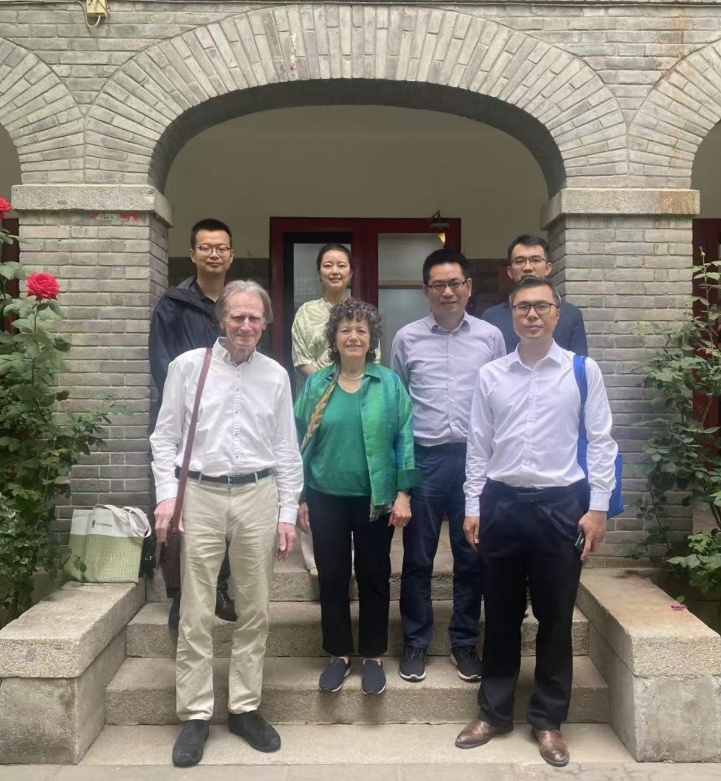

The 78th lecture of the “Adventus Amicorum” seminar series, organized by the Institute of Country and Region Studies at Peking University, was held on May 15, 2026. The seminar’s theme was “Political Challenges Facing the Global Order.” The keynote speaker was Vivien A. Schmidt, Professor Emerita at Boston University and a Fellow of the American Academy of Arts and Sciences. Jolyon Howorth, Professor Emeritus at the University of Bath, participated in the discussion. Zhang Yongle, tenured associate professor at Peking University’s School of Law and executive director of the Research Center at the Institute of Country and Region Studies, served as moderator. Duan Demin, tenured associate professor at the School of Government, Peking University; Zhang Fan, tenured associate professor in the Department of Sociology, Peking University; Mao Mingchao, tenured associate professor at the School of Foreign Studies, Peking University; and Chen Xiaohang, assistant professor at the School of Law, Peking University, served as discussants.
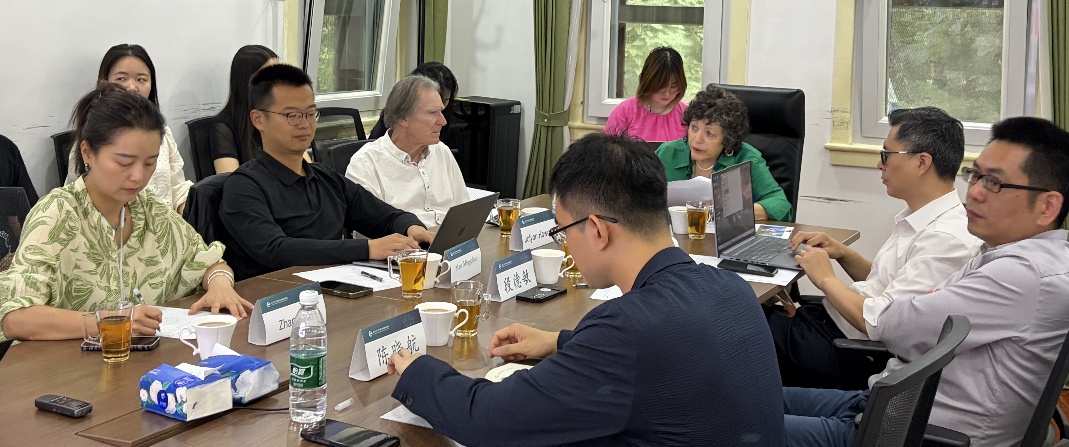
At the start of the event, Zhang Yongle offered a brief introduction to the two experts and the seminar. In the subsequent lecture, Schmidt analyzed the multiple political challenges currently facing the global order. Schmidt used the “3D” challenges—namely, the Disruption of geopolitics, the Destabilization of the geo-economy, and the Destruction of democratic institutions—to summarize the impact of the Trump administration and the post-Trump era in the US on the global order. US disruption of the geopolitical order includes the end of hegemonic stability, the weakening of multilateral security cooperation, the withdrawal from international institutional platforms, and the disregard for international law. Geo-economic destabilization encompasses five key dimensions: volatility and uncertainty in tariff policies, regression in climate policy, the dismantling of corporate regulatory frameworks, so-called “America First” industrial policies, and the weaponization of economic interdependence. Meanwhile, the excessive expansion of executive power, the weaponization of the judicial system, and the erosion of media and academic freedom have further undermined the US’s own democratic institutions.
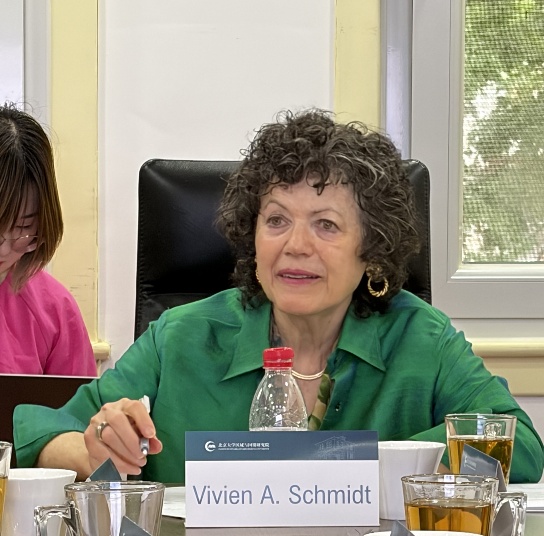
Furthermore, Schmidt pointed out that existing academic theories fall short in analyzing these phenomena. Grounding her argument in populism—the core driver of the Trump administration’s policy shifts—she proposed a “4M” analytical framework for populism comprising four elements: Message, Messenger, Medium, and Milieu. Schmidt noted that populist messages are characterized by anti-immigrant and anti-minority sentiments, climate skepticism, and extreme nationalism; populist leaders court voters by appealing to a sense of “authenticity.” Additionally, they appoint numerous advisors who lack professional diplomatic experience and tend to advocate extreme policies; media platforms—including both traditional and social media—amplify anger and emotion through the echo chamber effect, driving the spread of extremist information; the milieu, meanwhile, points to the root causes of populist discontent, with the concerns, anxieties, and desire for regained control among those left behind by globalization forming the fertile ground for populism to thrive.
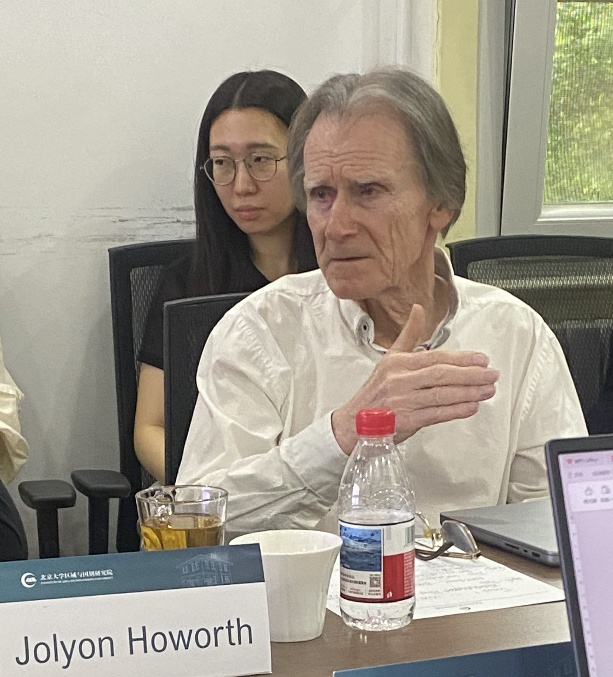
Finally, Schmidt and Horvath jointly analyzed the numerous challenges facing Europe, both internally and externally. Schmidt noted that the EU faces external pressures from US geopolitical and economic estrangement and the erosion of democracy, while internally it struggles to unite its member states. Addressing populism in Europe requires integration at the EU level, but the fragmentation it causes hinders that integration; the EU can no longer “return to its former state.” She argued that the EU’s approach of unquestioningly yielding to and catering to the US is no longer effective. Instead, it must achieve strategic autonomy through concrete actions in areas such as external geopolitics, the economy, and internal responses to populism, thereby overcoming dual political challenges from both within and without. Otherwise, it will gradually lose its original political standing and economic strength. Horvath added to the discussion on Europe’s strategic autonomy, arguing that Europe must achieve strategic autonomy across four key elements, which he summarized as the “4Ms”: Money, Munitions, Mutual Assistance, and Mobility. Addressing the populist characteristics of the Trump administration, as noted by Schmidt, Horvath added that Trump’s decision-making process was chaotic and shaped by conflicts among various interest groups, resulting in extreme unpredictability in US foreign policy.
Zhang Yongle thanked the two professors for their insightful presentations and offered his own commentary on how identity is perceived amid the excessive expansion and strategic retrenchment of US hegemony. During the subsequent discussion, participating scholars drew on diverse perspectives—including international politics, comparative politics, political thought, and cultural studies—to engage in an in-depth exchange on topics such as the impact of populism on European politics, the practical feasibility of European strategic autonomy, shifts in European elites’ attitudes toward the US, and a comparison of institutional flexibility between the US and Europe. The event featured extensive on-site interaction and a lively atmosphere. This lecture not only highlighted the critical value of ideas and discourse analysis through “discourse institutionalism” and its analytical framework but also provided a multidimensional perspective on the restructuring of the global order and on understanding Europe’s role in the transformation of world politics.