

The 73rd "Adventus Amicorum" salon series hosted by the Institute of Country and Region Studies (ICRS) was held on April 21, 2026. The lecture, titled “East, West, and the Rest: How East–West Antagonism Reshapes North–South Relations,” was delivered by Jörg Friedrichs, an associate professor in the Department of International Development at the University of Oxford. Zhang Yongle, executive director of Research Base of ICRS, moderated the event. Other participants included Zan Tao, deputy director of ICRS; Duan Demin, a tenured associate professor at the School of Government Management, PKU; Liu Haifang, an associate professor at the School of International Studies, PKU; and Zhang Fan, a tenured associate professor in the Department of Sociology, PKU.
At the beginning of the lecture, Friedrichs reviewed the history of the “Three Worlds” concept, which gradually fell out of use after the Cold War. He noted that as concepts such as the “Global West,” the “Global East,” and the “Global South” have re-entered the field of international relations research, scholars need to re-examine the position of Southern states in East–West contestation. He argued that the current situation cannot be simply understood as a “new Cold War”: on the one hand, today’s world remains highly interdependent in trade, technology, and industrial chains; on the other hand, the Global South is no longer what it was during the Cold War, as countries such as India and Brazil now possess greater autonomy, while China has also become an important force shaping the global order. Therefore, the Global South does not passively accept arrangements made by Eastern and Western powers but actively weighs the resources, institutional arrangements, and value narratives that different parties can offer across various spheres.
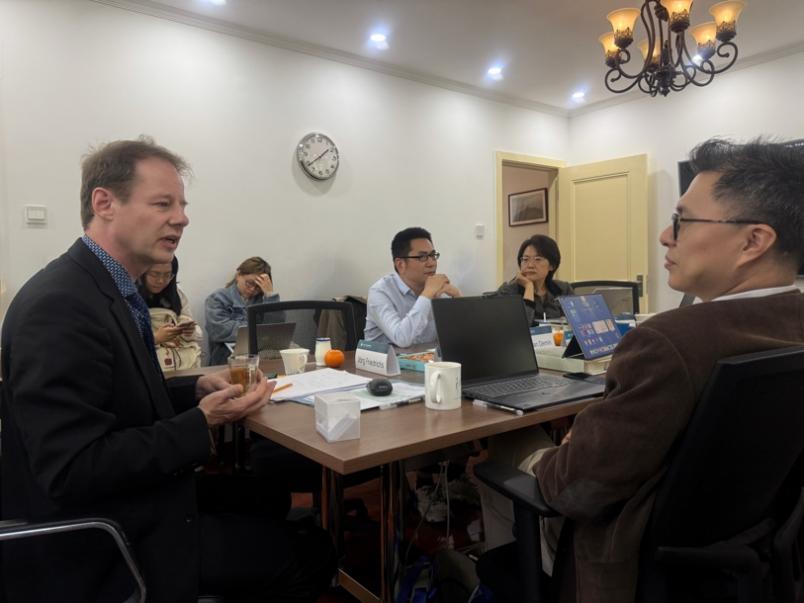
Within the theoretical framework, Friedrichs introduced a neo-Gramscian perspective, viewing hegemony as a process of negotiation over “consent.” Based on this framework, he analyzed relations among Eastern and Western powers and the Global South across three dimensions: political security, economics, and values. In the sphere of political security, the primary challenges faced by many Southern states are not external wars but state-building, regime stability, internal insurgency, and social governance. Although the West can provide advanced weapons and security assistance, such assistance is often accompanied by conditions related to elections, democratization, and governance reform, which some Southern governments may view as excessive intervention. By contrast, the security cooperation offered by China and Russia better aligns with the practical needs of Southern governments for regime stability and national security.
In the economic sphere, Friedrichs noted that Southern states generally need development finance, infrastructure investment, climate adaptation funding, and other forms of resource transfer, while also controlling natural resources, strategic minerals, and key nodes in global value chains. The West has long relied on free trade and general market access, whereas Eastern states have more often built cooperative relations through infrastructure construction, loan arrangements, energy cooperation, and long-term resource agreements. As strategic resources become increasingly important, Eastern states have already gained a first-mover advantage in some areas, placing greater pressure on the West as it seeks support from the Global South. In the sphere of values, many Global South countries retain profound memories of colonialism, imperialism, and historical inequality, and have strong demands for historical reckoning, recognition, apology, and even compensation. Issues such as Palestine, in particular, can evoke strong historical resonance among Southern states. He thus pointed out that, in the contest for hegemonic followers in the South, Eastern powers have gained a certain strategic advantage. Nevertheless, although Southern states are generally more inclined to tilt Eastward, this tendency remains constrained by their cautious reluctance to align completely with either side.
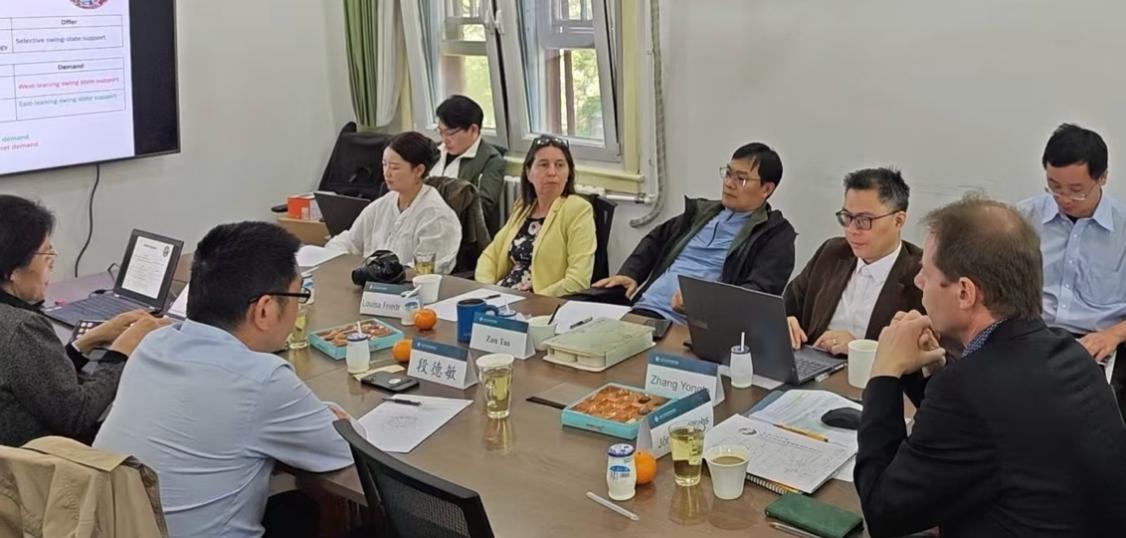
During the discussion, Zhang Yongle began by addressing translation, exploring the distinction between baquan (霸权) in the traditional Chinese differentiation between wang (王) and ba (霸), and “hegemony” in the Gramscian sense of leadership. He also noted that when Western academia and media use the concept of the “Global East,” they often place China and Russia side by side in the context of the Russia–Ukraine conflict, presupposing that the two jointly constitute a challenge to the so-called “liberal international order.” Such a classification, he argued, overlooks China’s impartial position in this conflict and the fact that China is the largest trading partner of both Russia and Ukraine. It also neglects the significant differences among the countries referred to as the so-called “Global East” in terms of historical experience, identity formation, and the logic of international behavior.
Zhang Fan then turned to Gramscian theory itself, arguing that hegemony in the Gramscian sense is more deeply embedded in the values, cultural narratives, and civilizational narratives hidden behind institutions and actions. These underlying ideas continually shape how people understand the world and take political action. Using the ideological divergence between the German Social Democratic Party and the Russian Revolution as an example, she pointed out that European history has long contained imaginations of an “Eastern threat,” and that this value structure has profoundly shaped European politics and judgments in international relations. Liu Haifang affirmed the speaker’s effort to analyze the Global South as an agentic subject, but also noted that the political, security, economic, and value dimensions are often intertwined in reality and may not be clearly separable. Drawing further on the example of military technology cooperation between China and South Africa, she noted that South–South cooperation is not always a one-way transfer; among Southern states, there are also two-way flows of technology, experience, and capacity. Liu Haifang also emphasized that what the Global South cares about is not only the question of taking sides in great-power competition, but also the attractiveness of development models themselves. In the 1960s, the Soviet model influenced many African countries. Today, as China’s interactions with Africa and other Southern states deepen, the attractiveness of China’s development experience may also become an important dimension for understanding South–South relations.
Duan Demin approached the discussion through the lens of the Palestinian question and the historical construction of the concept of the “East.” He noted that the Global South’s support for Palestine cannot be reduced to differences in interests; more importantly, many Southern states see in the Palestinian experience their own histories of colonial rule, violent domination, and double standards. He further noted that the concept of the “Global East” largely reflects Western projection, as it tends to place China and Russia on the same side as opponents. Yet China does not necessarily understand itself through an “East against the West” framework. Rather than attempting to establish a new system of global domination, China places greater emphasis on its identity as a developing country, a member of the Global South, and an equal state under international law.
Zan Tao examined the relationship among “hegemony,” baquan (霸权), and China’s self-positioning, drawing on Chinese intellectual traditions and conceptions of international order. He noted that contemporary international relations theory still has limitations in explaining China’s relations with the Global South. China’s self-understanding as a member of the Global South is not merely a diplomatic strategy but also reflects the shared historical experience of colonized and oppressed peoples since modern times. Drawing on concepts such as wangdao (王道), badao (霸道), and tianxia (天下), Zan Tao emphasized that Chinese intellectual traditions contain visions of order that differ from the Western logic of hegemony. To understand China’s relations with the Global South, one must attend not only to practical interests and great-power competition but also to the role of historical memory, political identity, and moral claims in shaping China’s diplomatic narratives.
In his response, Jörg Friedrichs stated that the “Global West,” the “Global East,” and the “Global South” are constructed concepts with historical and political meanings, and that their use requires vigilance against the civilizational hierarchies and value assumptions behind them. Regarding whether the Global South will tilt Eastward in the long term, the speaker argued that this trend may not be permanent. As the West declines in relative terms and Eastern powers rise further, Southern states’ threat perceptions, interest calculations, and strategic choices regarding major powers may shift. The participating scholars generally agreed that to understand how East–West antagonism reshapes North–South relations, one must start not only with the strategies of major powers but also with the needs, experiences, and agency of the Global South itself.
