

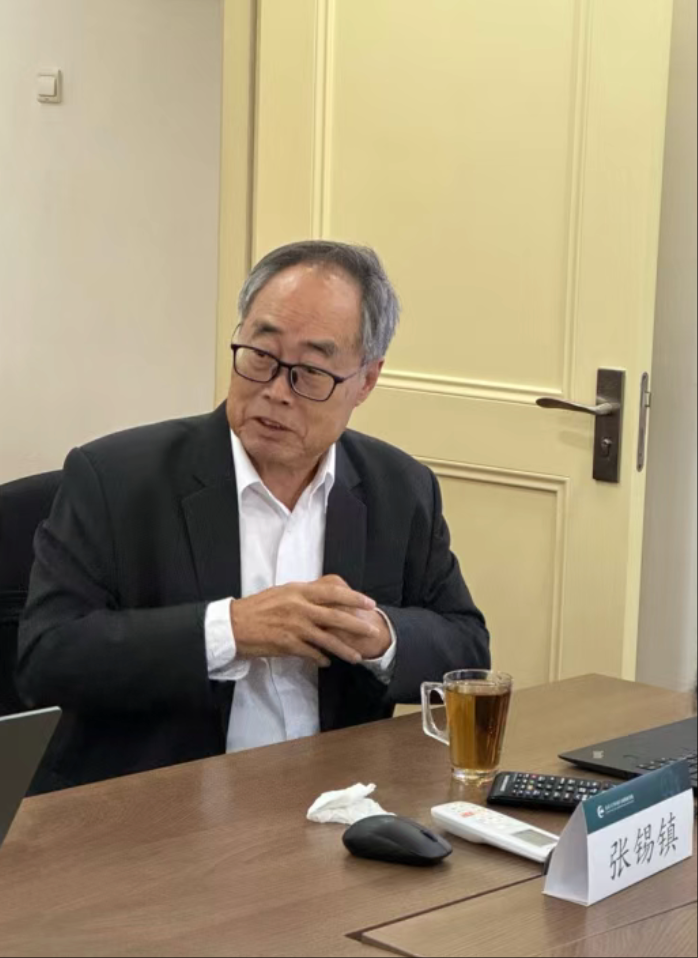
The 16th session of the Master Salon series hosted by the Institute of Area Studies, Peking University (PKUIAS) was held on December 15, 2025. The theme of the seminar was “Observations on Thailand’s Political Maze.”
This seminar was presented by Zhang Xizhen, a professor at the School of International Studies, Peking University and the Department of Chinese Studies, Pridi Banomyong International College, Thammasat University (Thailand). The seminar was moderated by Associate Professor Wan Yuerong from the School of Foreign Languages, Peking University. Prof. Zhai Kun, deputy director of PKUIAS, Jin Yong, tenured associate professor at the School of Foreign Languages, Peking University, as well as teachers and students from various departments and colleges both on and off campus, participated in the discussion.
Zhang Xizhen analyzed Thailand’s political situation from three perspectives: the subjects, the structure, and the operation of political power. He pointed out that the military, the monarchy, political parties, and senior judicial bureaucrats are the four main power players in Thai politics. Among them, Thailand’s military has long been deeply involved in political affairs and enjoys a high degree of independence. The monarchy is not only the symbolic head of state, but also plays a unique role at critical moments of the political landscape. Party politics in Thailand has experienced twists and turns in its development, with a low level of institutionalization, and is vulnerable to external interference. And the senior judicial bureaucracy, which gained independent status under the 1997 constitution, has often served as a legal tool for the traditional power groups to safeguard their own interests in practice.
Zhang Xizhen traced the evolutionary course of Thailand’s political power structure and emphasized that the current political situation in Thailand exhibits a “two-bloc, three- force” structure, among which various forces maintain covert and complex interactions. A new development in recent years has been the emergence of the third force, represented by the Future Forward Party, the Move Forward Party and the People’s Party. This force reflects the aspirations of certain social groups, especially the younger generation, and has brought about changes to Thailand’s existing political power structure.
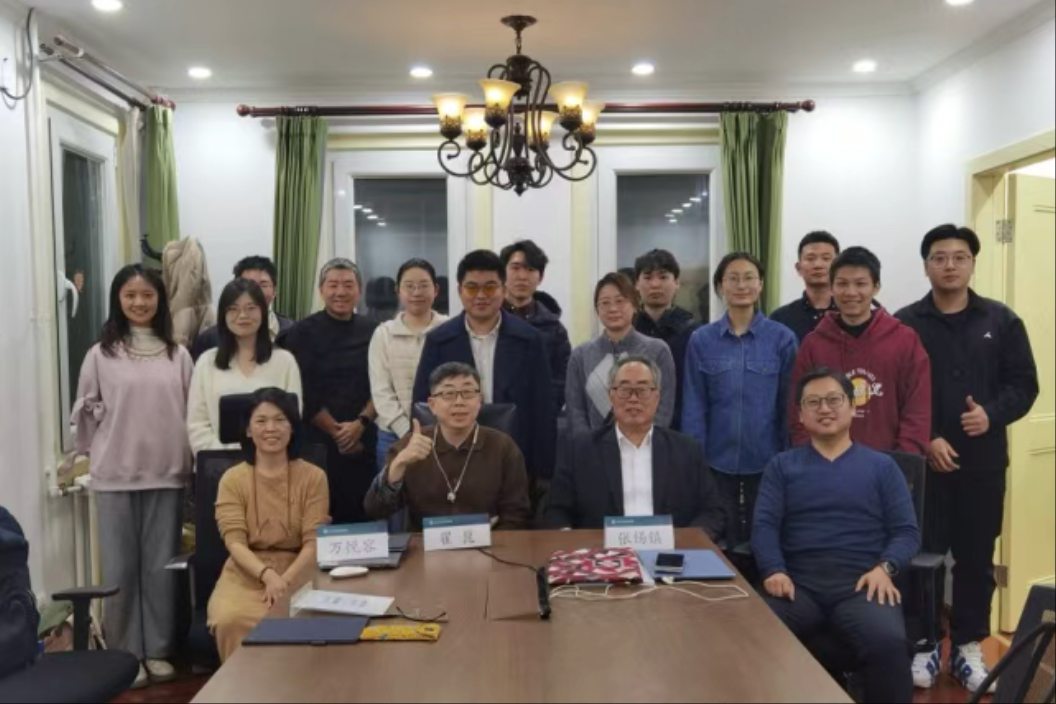
Finally, combining examples of elections and government changes in recent years, Zhang Xizhen further analyzed the actual operational logic of various power entities. Overall, the traditional forces in Thailand’s political system still have a strong institutional and resource base, and can influence the political process through various means. Although the social attention received by emerging political forces has increased, they still face numerous constraints under the existing structure. The future political process is expected to continue evolving through multifaceted interactions and dynamic equilbrium.
In the subsequent discussion session, teachers and students present conducted an in-depth discussion with Zhang Xizhen on issues such as the root causes of social changes in Thailand, the prospects of the Orange Forces, the Thai–Cambodian border conflict, and the development trend of Sino–Thai relations. The exchange amply illustrated that the study of Thai politics requires not only insight into its internal power dynamics, but also its contextualization within the broader framework of regional and global changes.
